
Hard vs. Soft Enamel Pins: Which One Should You Choose?
Ever started at a pin and wondered why some feel smooth and sleek while others have a textured, bumpy surface?
That tiny detail can completely change the vibe of your accessory. Choosing the right enamel pin is choosing the touch, style, and statement.
Imagine gifting a pin. Do you want it to feel polished and premium, or fun and playful? That choice can say as much as the design itself. One whisper of sophistication; the other, personality.
By the end of this guide, you will know which pin type fits your style, your audience, or even your next DIY project.
Let’s dive into the world of hard and soft pins and find out which one deserves a spot in your collection.
What’s the difference between soft enamel and hard enamel pins?
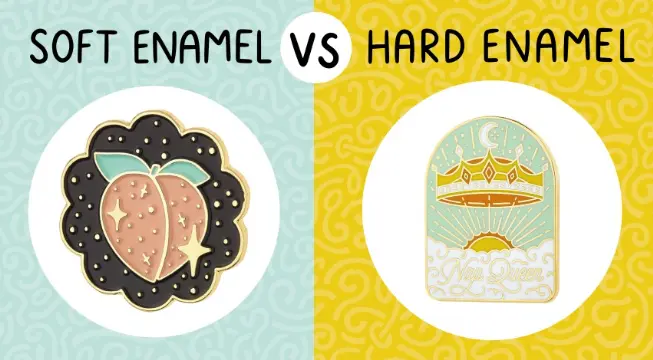
Before you pick your perfect pin, it helps to understand what sets hard and soft enamel apart. Hard enamels are polished to a smooth finish, giving them a sleek, glass-like appearance.
The colors sit flush with the metal lines, creating a premium, refined look. They are perfect if you want a pin that feels high-end and lasts for years without scratching easily.
Soft enamels, on the other hand, have recessed color areas that sit below the metal edges. This creates a textured, tactile feel that adds depth and character to the design.
They are often more vibrant, playful, and budget-friendly, making them ideal for collectibles, fan art, or pins meant to stand out in a stack.
Choosing between them comes down to purpose, style, and audience. Are you going for,
- Luxury or personality?
- Minimalist or bold?
Let’s break it down further so you can make the right call.
What are soft enamel pins?
Soft enamel pins are a type of pin where the colored enamel sits slightly below the metal outlines, creating a textured, raised design.
When you run your finger over a soft enamel, you can actually feel the ridges of the metal lines, which gives it a tactile, dimensional look.
They are often vibrant and playful, perfect for design that pops with personality. Because they are easier and cheaper to produce than hard enamel, soft pins are popular for collectibles, fan art, merch, or small-batch projects.
In short, soft enamels are fun, detailed, and full of character, but they may be slightly more prone to scratching compared to their polished hard enamel cousins.
Purposes of soft enamel pins
There are numerous practical and creative reasons for the existence of soft enamels.
- Branding and Merchandising: Small businesses, artists, and others use soft pins to create low-cost merchandise that fans can collect.
- Collecting and Trading: The vibrant colours and tactile nature of soft enamels make them highly desirable for pin trading events or limited-edition pin collections. For collectors, the texture and detail of a soft enamel add value beyond the image alone.
- Event Giveaways: Used at conventions, product launches, and other promotional events, soft enamel pins are lightweight, inexpensive keepsakes for recipients.
- Expressing flavor or personal style: Soft enamels let people personalize jackets, hats, backpacks, etc. with their unique designs, offering many ways for each individual to express their personal style.
- Art or DIY Projects: Soft enamels are often used by artists and other creators to experiment with new design ideas, colors, and limited edition runs at a very low initial cost.
- Essentially, soft enamel pins are a great example of versatility as they can be playful, collectible, and expressive, emphasizing both style and brand identity.
How soft enamel pins are made
Soft enamels are crafted with a combination of artistry and precision to create their textured, colorful look. Look for custom pin maker no minimum order or other limitations. Here’s the process step by step:
- Design and mold creation: Everything starts with a digital design. From this, a metal mold is made, stamping the design into a metal sheet. The raised metal lines of the mold will later form the outlines of the pin.
- Die Striking and cutting: The pin is cut out from the stamped metal sheet. This gives it its final shape and ensures the raised edges that separate the colored areas are crisp and precise.
- Filling with enamel: The recessed areas between the raised metal lines are filled with colored enamel. Unlike hard enamel, the enamel sits slightly below the metal, giving soft enamels their textured, tactile feel.
- Baking and hardening: The enamel is baked at high temperatures to harden it, locking in the color and preventing easy chipping.
- Plating and finishing: The pin is plated with metal, and any additional touches, such as an epoxy coating, glitter, or custom backings, are added.
The result is a vivid, textured pin with raised metal outlines and recessed color. Perfect for collectibles, fan art, and expressive designs.
What are hard enamels?
Hard enamel pins are pins filled with colored enamel in recessed areas.
After being filled, the pins are polished to make the enamel surface flush with the metal lines, producing a flat, shiny, smooth surface without the bumps or ridges found on soft enamel pins.
Hard enamels are considered a premium-grade product because of how they are produced and the polished finish they achieve.
They are frequently used for high-quality merchandise, as corporate gifts, and by collectors seeking an item with a high-end, long-lasting look.
These pins would be slightly more durable and resist scratches better than soft enamel pins, thanks to the extra polishing step.
In summary, hard enamel pins are beautiful, smooth, and durable products that are the best option for applications that require a classy, professional look.
Purposes of hard enamel pins
Hard enamel pins have distinct functions associated with premium products:
- Company or Business Branding & Corporate Branding: Because hard enamels offer an ultra-smooth, polished finish, they are also used to brand company logos and other corporate awards and promotions.
- Premium Merchandise & Collectibles: Collectible hard enamels come in a variety of styles and designs. Limited-edition hard enamel that offers a luxurious feel is popular among fans and collectors for its sturdy construction and sleek appearance.
- Recognition & Awards: Hard enamels offer a polished, refined appearance, making them ideal for employee recognition, membership pins, or awards for outstanding performance.
- High-Quality Gifts: Hard enamel makes excellent high-end gifts for fans, friends, and customers because it offers a level of elegance that soft enamel pins cannot.
- Long-Lasting Wear: Because hard enamels are less likely to scratch or damage during regular wear, they are ideal for individuals who want a pin that will last and maintain its polished appearance over time.
In short, hard enamels are ideal for those who want to project a sense of luxury, durability, and professionalism while also conveying a collectible quality.
How Hard Enamel Pins Are Made
Hard enamels possess a durable and polished finish, a key distinction between them and soft enamel pins. Here’s a step-by-step guide to creating hard enamel pins.
- Creating the design and mould: The process begins with a digitally created design. Once the design has been completed, a metal mould is either stamped or etched. The raised lines created by this process will form the outline of the pin and define the boundaries for color placement on the pin.
- Striking and cutting the die: The next step is to strike and cut the die that shapes the pin’s form and physical characteristics. The edges of the raised metal, corresponding to the final shape, create a physical boundary for the enamel colors.
- Filling the enamel: The next step is to fill the recessed areas of the hard enamel pin with enamel, just like you would for a soft enamel pin.
- Baking and polishing: Once all of the recessed areas have been filled with enamel, the enamel will be baked (hardened) and the top surface polished flat so that the enamel and metal lines of the finished pin will be perfectly flush.
- Plating and finishing: For the final step, the hard enamel pin will be plated in the material you choose. Some additional finishing touches may also be added to the pin, including protective or decorative coatings or backings to enhance its overall durability.
Soft enamel vs. hard enamel
| Feature | Soft Enamel Pins | Hard Enamel Pins |
| Surface Texture | Textured, raised metal lines, recessed color | Smooth, flush with metal lines |
| Feel | Tactile, slightly bumpy | Sleek, polished, glass-like |
| Color Vibrancy | Bright and vivid | Slightly muted due to the polishing process |
| Durability | Less durable, more prone to scratching | Very durable, scratch-resistant |
| Production Cost | Lower, budget-friendly | Higher, premium cost |
| Best Uses | Collectibles, fan art, giveaways, casual pins | High-end merchandise, professional or luxury designs |
| Finish | Metal lines raised above enamel | Enamel level with metal, polished finish |
| Production Time | Faster | Slower, requires an extra polishing step |
Conclusion
Choosing between soft and hard enamel pins comes down to style, purpose, and budget.
Soft enamel pins are playful, textured, and perfect for collectibles, fan art, or affordable giveaways. They are full of personality and let your design stand out with vibrant colors and tactile detail.
Hard enamel pins, on the other hand, offer a sleek, polished finish and unmatched durability. They are ideal if you want a premium, professional look that lasts for years and feels luxurious to the touch.
Ultimately, both types have their own charm. Whether you are expressing personal style, creating merchandise, or building a collectible series, understanding the differences helps you pick the pin that perfectly matches your vision.