
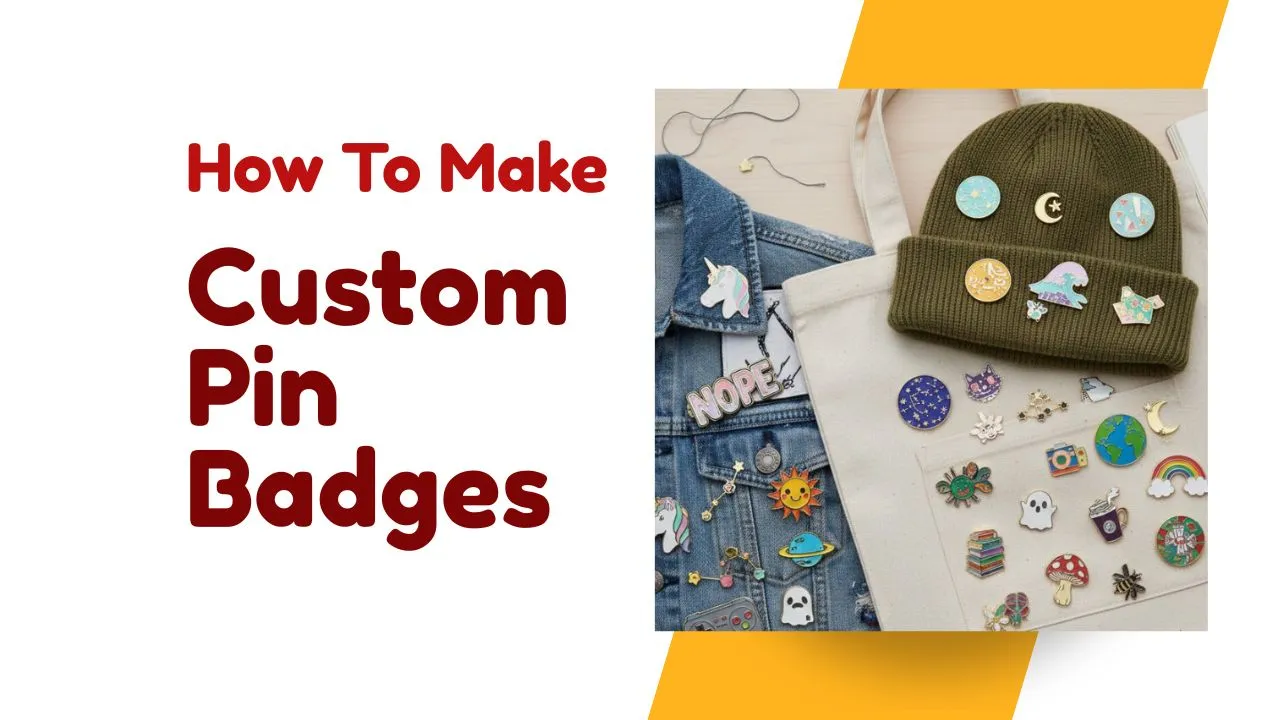
How To Make Custom Pin Badges
They may be small, but custom pin badges have a lot of importance for the person wearing one. Badges are a tool for showing their personality, supporting a particular cause or organization, promoting a business, and celebrating sports teams or team members. This guide shows you how to make your own custom pin badge with clear, step-by-step instructions from the initial concept to final production.
Have you ever looked at a pin badge and thought,
“I could make a pin badge like this.”
But have no clue where you would begin? You are not the only one with this thought. When most people think about the process of making pin badges, they think it is too detailed and complex to do. However, in reality, making custom pin badges is easier than you think once you have a clear understanding of the basics.
What Are the Advantages of Having Custom Pin Badges?
They’re affordable, personalized, and easy to wear, which makes them an excellent accessory for anyone looking to show off their personality or interests. With a wide variety of uses that include various styles, colors, and materials, a pin badge is a perfect fit for any purpose.
Custom Pin Badges Can Be Used For
You can see them on anything from jackets and bags to hats and uniforms. Brands use pin badges as promotion, sports teams use them to promote pride, and clubs and events use pin badges to promote identity. You can even wear pin badges simply for fun or self-expression.
Why Are People Interested in Custom Pin Badges?
The flexibility of custom pin badges makes them extremely popular with customers. Customers can choose the size, shape, color, and finish that best fit their needs. This makes them suitable for almost any purpose, including business marketing and personal collections.
Pin Badges Also Are Long-Lasting
Unlike other forms of advertising, such as stickers or flyers, pin badges can last a very long time. Pin badges can be kept by customers for years, which provide them with a permanent reminder of your business.
Steps to Create Custom Pin Badges
Let’s explore some simple steps for designing personalized pin badges.
Decide on the Purpose and Design
Before you even think about choosing colors or materials, you must be clear about your design. Some questions you should consider before creating your custom badge are:
- Who will this badge be for?
- What message should it convey?
- Where do you want customers to wear this badge?
- How do you create a custom pin badge?
To create a pin badge, the main thing to do is make it very simple, clear, and recognizable even at small sizes.
Sketching of the Badge
To begin, sketch an idea you have in mind, like a symbol, word, or 2-3 word phrase, and then slowly refine that idea until you’re happy with your pin design.
There are some basic design rules to follow that will provide successful results:
- Use bigger shapes rather than thin lines
- Don’t use more than 2-5 colors maximum
- Don’t use very small text
- The design should look good in either a 1″ or a 2″ size
If what you see on your computer screen matches what a pin badge will look like, you have an accurate representation of how well your pin design will be visible when worn.
Choosing the design format of the Badge
Once you have completed your design in any of the listed computer formats, such as AI, EPS, or SVG, you will need to create a pin badge or other test item.
A vector file will keep your design sharp, no matter how small or large you create the final product from any other vector file format. If you are unable to create a vector file for your design because you do not have access to professional design software, you can use a high-quality PNG file for an early design planning file.
Most manufacturers will help to clean up or redraw your original pin design if necessary, so don’t worry.
Common Design Mistakes to Avoid
Here we have listed a few of the mistakes in designing that we need to avoid:
- Too much text becomes impossible to read.
- Very small details will be lost in the metal production.
- Too many colours are going to add more expense to the badge.
- No border makes your design look incomplete or unfinished.
When you are designing your pin badge, it is not about being an artist. It is about being clear.
Which Types of Materials Are Used to Create Pin Badges?
Pin badges can be produced from metal with color through the addition of enamel.
Let’s just keep this simple because a pin badge normally consists of two parts only.
The base metal and the color that fills it. The metal makes the badge strong while the color gives it life.
Common Types of Metals Used in Badges
Most badge makers use metal since it is more durable than other materials, and has a more high-end look.
- Iron
Gauges well for strength and cost.
- Brass
Provides a smooth surface with excellent detail.
- Zinc alloy
Great for detailed and complex shapes.
The above three metals are generally the types of metal most often selected by Canadian buyers looking for durable yet lightweight lapel pins Canada.
Soft vs Hard Enamel
| Type | Look | Best Used For |
| Soft Enamel | Textured | Bold, Colourful Designs |
| Hard Enamel | Smooth | Clean, High-Quality Badges |
If you are looking for something simple, soft enamel is likely your best choice. If you are looking for a polished finish like jewelry, hard enamel would be your best choice.
Do Materials Impact Final Look? Significantly
A sports pin, like custom baseball pin badges, generally requires a stronger base material. This is because of the additional wear and tear placed on a sports pin badge.
The process of producing custom pin badges may appear complicated, but it is actually simple when each step is explained.
- Custom-made pin badges begin with the design being molded from a metal tool. This mold defines the final shape and outlines for the badge. After the mold is completed, metal is pressed into the required shape.
- Colour should be added to the badge via enameling. This stage is the most critical because it fills all the colours back into each design area before the badges are fully dry. This gives the badge its individuality.
- Once the enamel has completely dried, the badge will have a polished ceramic surface. The polishing process removes defects from the edges of the badge, giving it a clean, finished look. Badges can undergo additional plating in gold, silver, or black to further enhance their appeal.
- Finally, the badge will have a pin backing. This will allow the wearer to attach the badge to their garment, bag, or cap.
What Should You Choose for a Pin Backing?
Select a backing that is secure, safe, and appropriate for the way a person will wear the badge on their clothing.
Backings are used to keep the badge attached to a clothing item. This comes in many sizes, shapes, and strengths. Choosing an appropriate pin backing will keep the badge comfortable and prevent it from falling off.
Here are the most common backing types for pins:
1.Butterfly Clutch
Small and easy to use for light badges.
2. Rubber Clutch
This is soft and used for kids or delicate fabrics.
3. Safety Pin
Strong enough to hold a heavy badge.
4. Magnet
Does not use a pin and is safe for all fabrics, but slightly heavier than other options.
Small and easy to use for light badges.
Why is it Important Which Backing You Choose?
Because a badge that falls off is worthless, no matter how attractive it is.
When properly secured with the right backing, the badge can be worn comfortably and will be an enjoyable part of the overall outfit. While the backing of the pin is only a small item, it has a large effect on how well the pin will perform.
There are many ways to create an amazing pin badge that is quickly recognizable and looks great on anyone wearing one. To get started, here are a few suggestions for you to think about:
- This pin has a lot of bold colors. It uses bright or contrasting colors, which naturally attract attention.
- Don’t use too many elements in your design, because it will appear cluttered. In general, simple designs are much easier to read than cluttered designs.
- You can also use a unique touch on your badge, such as a symbol or shape, and a slogan that tells the story behind the memorial.
- When designing your pin badge, always consider your audience. The design of a child’s badge may differ from a badge designed for an adult business professional.
Making small creative choices will definitely have a positive impact on how well people remember your pin badge.
Frequently Asked Question
1. What is the production time for personalized pin badges?
Personalized pin badges take approximately 2 – 4 weeks to produce. Production times are based on factors like design complexity, badge color, and the quantity of the order.
2. Can I order just a few badges?
Yes, many manufacturers will accept smaller quantities, but expect to pay a higher unit price for smaller badge orders than for larger ones.
3. How much do custom pin badges cost?
Custom pin badges can be fairly economical, depending on the quantity ordered, with pricing determined by various factors. This includes badge size, badge material, number of colours used in each badge, and total quantity.
The Ending Notes
Custom pin badges can be made with ease if you have a vision, an uncomplicated design, the appropriate materials, and the right backing. A pin badge can positively impact your club, sports team, business, or general fun.
You must follow a few simple procedures when designing your pin badges. Small details like colors, shapes, and simplicity can help make your badge more appealing and more memorable than any other pin badge on the market. With some planning, you’ll be able to create a truly personal statement.