
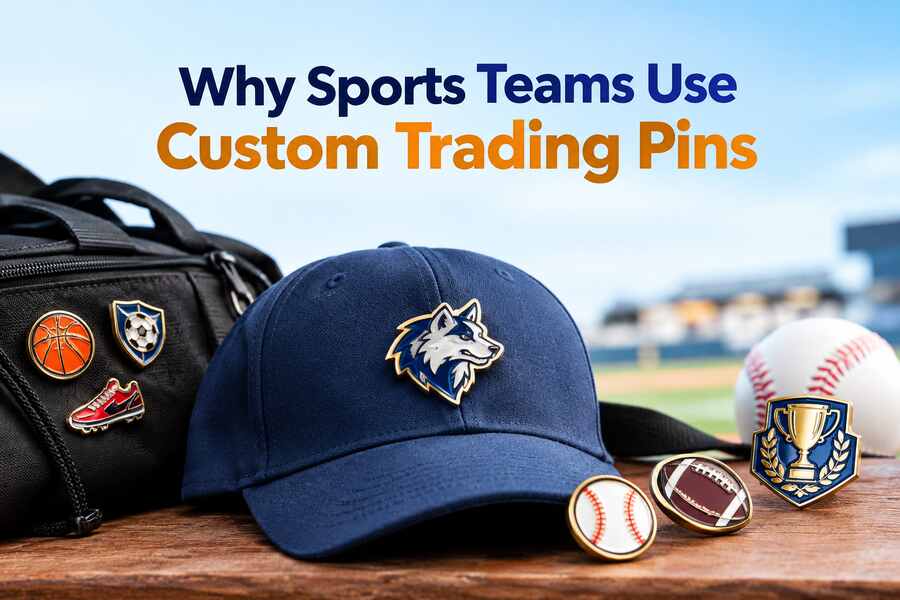
Why Sports Teams Use Custom Trading Pins
Walk into any youth hockey or baseball tournament in Canada, and you’ll spot kids swapping small metal pins between games. Teams use custom pins to show who they are, trade with the teams they play against, and give players something small to hold onto once the season wraps up. It’s a simple tradition, but it’s stuck around for a reason.
This guide covers why teams bother with pins in the first place, what actually makes one hold up over a full season of handling and trading, and how a team goes from a logo idea to a finished order. If you’re planning pins for your team, this should make the process a lot less confusing.
What You Need To Know About Custom Trading Pins In Sports
A custom trading pin is known to bring multiple benefits for a sports team.
These include:
Custom Pins Build Team Identity and Connection
Teams use custom pins to show who they are, connect with other teams during games and tournaments, and give players something to keep once the season ends.
Most custom pins carry the team name, colours, and mascot, made small enough to clip onto a jacket, hat or lanyard.
1- Team Identity
A pin puts a team’s logo, colours, and mascot on something a player can actually wear. It works like a small badge of identity, easy to spot on a jacket or bag at any game or tournament.
2- Tournament Trading
Pin trading is a long standing part of youth sports in Canada. At the Quebec International Pee-Wee Hockey Tournament, running since 1960, players trade pins with the teams they face throughout the event. Ottawa’s Bell Capital Cup follows the same custom, with pin trading listed as one of its long-standing traditions.
3- Season Keepsake
By the end of a tournament, a player often walks away with pins from every team they played. Kids keep them on lanyards or in collections long after the season is over, as a simple reminder of the teams they played against.
A Few Factors Decide What a Pin Order Costs
Pin pricing comes down to a handful of factors, and knowing them ahead of time makes budgeting for a team order a lot easier. A few decisions made early on have the biggest impact on the final cost.
- Order quantity: Larger orders bring the per-pin cost down. Most youth teams order between 150 and 200 pins, enough for a full roster plus extra for trading.
- Pin size: Bigger pins use more metal and enamel, which raises the price slightly per unit.
- Number of colours: Each additional colour used in the design adds a small cost, since more enamel and setup work is involved.
- Extras: Add-ons like glitter fill or spinning attachments cost more than a standard flat pin.
- Plating: Gold, silver and nickel plating are priced differently, with gold usually costing the most.
Keeping the design simple and ordering close to a typical team size keeps the cost predictable without cutting into quality.
A Smooth Finish Keeps Pins Lasting Longer
A pin gets handled all season, clipped to lanyards, passed between hands during trades, and stuffed into bags between games. What keeps it looking good through all that is the surface finish and how well the colour holds, not just the design on it.
1- Handling and Wear
Pins go through a lot of contact over a season. Hard enamel pins have a smooth, polished surface that sits flush with the metal, so they hold up better to daily handling than softer or printed finishes, which wear down and scratch faster with the same use.
2- Colour That Holds
The enamel fill is baked into raised metal sections rather than sitting as a soft coating on top. That keeps the colours from fading or chipping after months of contact, trades, and travel between games.
Finish Comparison
| Type | Durability | Finish | Typical Cost |
| Hard enamel | High | Smooth, polished | Higher |
| Soft enamel | Moderate | Textured, glossy | Mid range |
| Offset printed | Lower | Flat, coated | Lower |
What Should a Team Know Before Ordering Pins
A pin order works out a lot smoother when a few basics are sorted early. These are the practical points worth planning around before placing an order.
1- Order More Than the Roster Count
A pin for every player sounds like enough, but trading uses up pins fast once a tournament starts. Most teams order extra, closer to 150 to 200 pins for a typical roster, so players still have pins left to trade by the second or third game.
2- Order Weeks Before the Season Starts
Production and shipping both take time, so ordering close to a tournament date leaves no room for delays. Placing the order several weeks ahead of the first game gives enough time for proofing, production and shipping to happen without a rush.
3- Check the Proof Before It Goes to Production
The proof is the last chance to catch a mistake before the pins are actually made. Colours, sizing and spelling are worth checking closely, since fixing an error after production starts means paying for a rerun and losing time a team may not have before its next game.
From Design to Finished Pin, Step by Step
Making a custom pin badge follows a set process, and knowing how to make custom pin badges from start to finish helps a team plan around it instead of getting caught off guard by delays. It starts with a design and ends with a finished, polished pin ready for the season.
1- The Design Stage
The process starts with the team’s logo or artwork, sent over as a clear file with the colors a team wants locked in. The design gets sized to fit the pin, usually somewhere between 1.25 and 2 inches depending on the age group and how much detail the logo needs. Simpler designs with fewer colours are easier to reproduce cleanly at smaller sizes.
2- The Proof Check
Before anything gets made, the manufacturer sends back a digital proof showing exactly how the pin will look, including colours, sizing and placement. This step matters more than it seems. Once a mould is cut and production starts, mistakes are expensive and slow to fix, so checking the proof carefully now saves both time and money later.
3- Production and Turnaround
Once a proof is approved, a mould is cut from the design, and metal pins are stamped from it. Each pin is then filled with enamel colour, polished and plated. For most Canadian teams, production and shipping together take a few weeks, so ordering pins well before the season starts or a tournament date gives enough room for this process to play out without a rush.
Quick Answers for Teams
1- How do you make custom trading pins?
You start with a digital design, choose a pin style like soft or hard enamel, and send the artwork to a pin manufacturer for a proof. Once the proof is approved, the manufacturer cuts a mould, stamps the metal, fills in the enamel colours, and polishes the finished pins.
2- How much do custom trading pins cost?
Most team pins cost between $2 and $6 per pin, depending on size, quantity and finish. A standard youth team order of around 200 pins typically works out to $2 to $3 per pin, while smaller orders under 100 pins cost more per unit.
3- What is the difference between soft enamel and hard enamel pins?
Soft enamel pins have a textured surface with raised metal lines and recessed colour, while hard enamel pins are polished flat and flush with the metal for a smoother, more durable finish. Hard enamel usually costs more but holds up better to regular handling.
4- How long does it take to get custom pins made?
Production typically takes two to four weeks after the proof is approved, plus shipping time. Ordering several weeks ahead of a tournament or the start of a season leaves enough room for this process without a rush.
5- How many pins should a team order?
Most youth teams order between 150 and 200 pins for a typical roster, which covers every player plus extras for trading. Ordering more than the exact roster count is common, since pins get traded quickly once games start.
The Takeaway
Custom pins start out as a small detail in season planning, but they end up mattering more once trading begins. A well-made pin holds up through months of handling, and a smooth ordering process means one less thing to worry about before a tournament. Getting the details right early, from the design to the proof to the order size, makes the whole thing easier for a team to manage. It’s a small addition to a season, but for players trading pins on the concourse between games, it often becomes one of the parts they remember most.

Steve Smith is an expert writer and industry contributor at CustomPin.ca, where he shares valuable insights about custom pins, promotional products, and branding solutions across Canada. Through his writing, Steve covers topics such as enamel pins, button badges, acrylic pins, and custom challenge coins, offering practical guidance on design choices, materials, and industry trends. His goal is to simplify the process for customers by providing helpful information that supports confident decision-making.